
By: The Charlee Bear Staff

Providing treats is an essential part of dog training, especially for food-motivated dogs. But what should a client do if they would like to train their overweight dog that is treat-obsessed?
Depending on the type of treat given and how often the dog is being trained, frequent treating could lead to excess weight gain. It’s important to find a balance between motivation and health, and get creative when trying to keep the dog engaged. If a client wants to learn how they can train their overweight but treat-motivated pet, here are some tips they can follow!
Healthy, Low-Calorie Treats
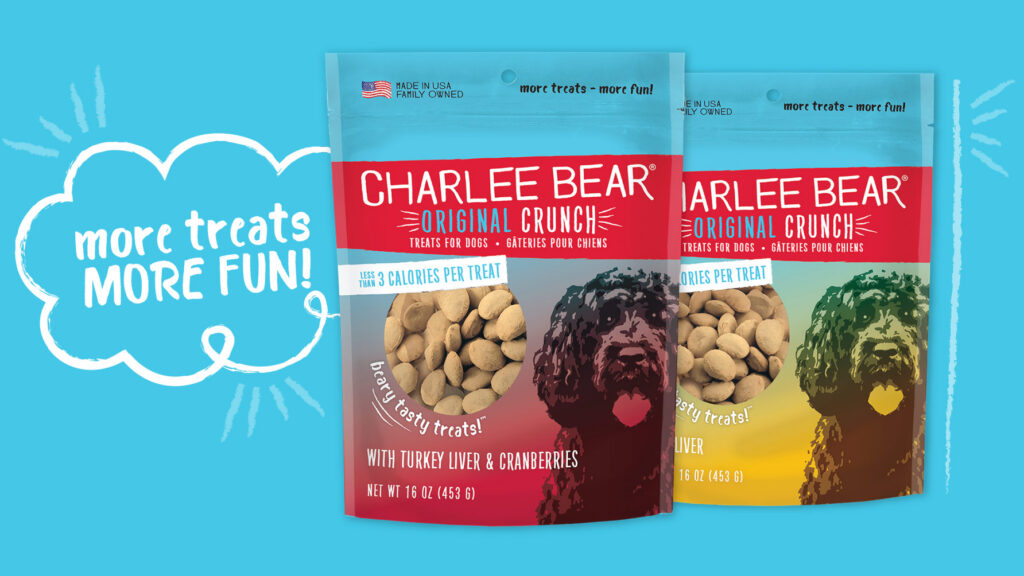
A simple solution to this problem is encouraging your client to find a treat that their pup loves, but is low-calorie and includes healthy ingredients. Ideally, a training treat should be small, easily palatable, and good for repetitive rewarding without the worry of weight gain. Treats like Charlee Bear’s Original Crunch are a great option since every treat is less than three calories and they’re designed specifically for training. Their newest Nuggets line also offers additional benefits, with each treat variety including functional ingredients that naturally address common canine health concerns, such as digestive, immune, and hip & joint issues. With treats like these on the market, a client has plenty of healthy options to choose from and see what their dog likes best!
Alternative Rewards & Training Techniques
Even if a client incorporates healthy treats into their overweight dog’s training routine, they should still try mixing in alternative rewards to keep their pup motivated. There are plenty of non-food related reward strategies they can try such as verbal praise, petting, or providing toys for playtime. Using toys as a reward is an extra bonus for overweight pets since a short burst of play acts as both positive reinforcement and exercise.
A client should also explore different training techniques to avoid excess treating. Keeping sessions short but frequent will keep the dog engaged without giving too many treats at once. Clicker training mixed with non-food-related positive reinforcement is also a great alternative, as it allows the dog to clearly understand which behaviors are desired while relying less on caloric rewards. By combining alternative rewards and different training techniques, clients can maintain motivation and support their dog’s overall health.
Maintaining Balance & Routine
Ultimately, motivation doesn’t have to come at the cost of a dog’s health! Clients should focus on creating a balanced training routine that combines healthy, low-calorie treats with non-food rewards and short but engaging training sessions. By mixing these strategies and keeping training consistent, their dog will remain motivated, your clients will see results, and overweight pets can stay on a healthier path without sacrificing the fun that reward-based training provides.