
By: The ABC Staff
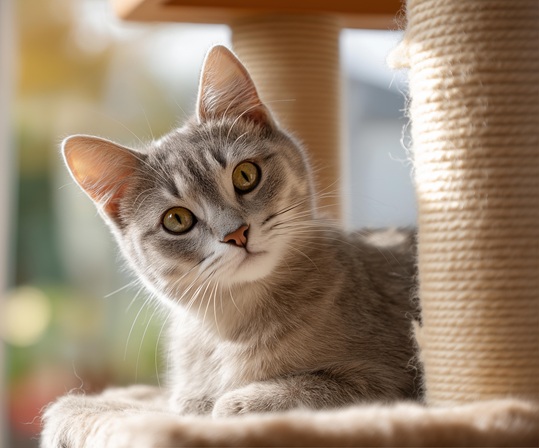 Cats may have a reputation for independence, but modern feline experts agree on one important truth: indoor cats need far more mental and physical stimulation than many people realize.
As more pet owners become educated about feline behavior and emotional wellness, the concept of “feline enrichment” has rapidly gained attention among veterinarians, trainers, behavior professionals, and cat lovers alike.
Today’s indoor cats aren’t just being given toys… they’re being provided opportunities to climb, explore, hunt, solve problems, and engage in natural behaviors that support both physical and emotional health.
Why Enrichment Matters
In the wild, cats spend much of their day hunting, climbing, observing territory, and engaging with their environment. Indoor cats, however, often live in spaces with limited stimulation and predictable routines.
Without appropriate outlets, boredom and frustration can develop over time, sometimes leading to unwanted behaviors such as:
- Excessive vocalization
- Overgrooming
- Destructive scratching
- Aggression
- Anxiety-related behaviors
- Nighttime hyperactivity
- Inappropriate elimination
What may appear to owners as “bad behavior” is often a cat attempting to meet unmet behavioral or environmental needs. Feline enrichment helps address those needs in healthy, constructive ways.
 The Importance of Vertical Space
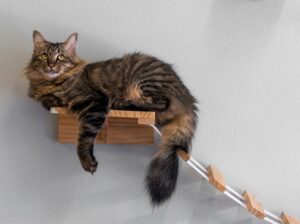
One of the most effective forms of feline enrichment is also one of the simplest: creating vertical territory.
Cats naturally feel safer when they can observe their environment from elevated spaces. Cat trees, shelving systems, window perches, and climbing walls allow cats to engage in instinctive climbing and surveying behaviors while increasing confidence and reducing stress.
In multi-cat households especially, vertical spaces can help reduce tension by allowing cats to create distance from one another when needed.
Puzzle Feeders and the “Hunt” Instinct
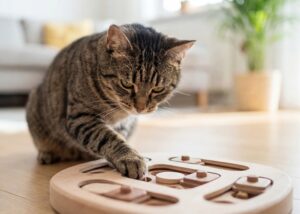
Many cats are fed from stationary bowls twice a day, but behavior experts increasingly encourage owners to incorporate puzzle feeders and food-dispensing toys into feeding routines.
These enrichment tools encourage cats to “work” for their food in a way that mimics natural hunting behaviors. Puzzle feeding can help reduce boredom, slow fast eaters, increase activity levels, and provide important mental stimulation.
Even simple changes, such as hiding treats around the home or rotating enrichment toys, can make an environment more engaging for indoor cats.
Yes, Cats Can Be Trained
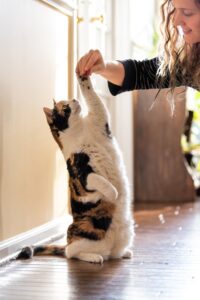
Another growing trend in feline enrichment is clicker training. Contrary to the myth that cats are “untrainable,” many cats respond exceptionally well to positive reinforcement training methods. Trainers and behavior professionals now regularly teach cats behaviors such as:
- Targeting
- Stationing
- Harness walking
- Nail trim cooperation
- Carrier comfort
- Recall cues
- High-five and trick behaviors
Training sessions provide mental exercise while also strengthening the bond between cats and their humans. For shy or anxious cats, confidence-building exercises can also help reduce stress and improve overall emotional wellbeing.
Reducing Stress in Modern Cats
Research and growing public awareness have highlighted how sensitive cats can be to environmental stressors. Loud noises, lack of hiding spaces, inconsistent routines, overcrowding, and insufficient stimulation can all impact feline behavior and health.
As a result, pet professionals are increasingly emphasizing proactive enrichment rather than simply reacting to behavior problems after they develop. This shift represents a larger movement toward understanding cats not just as pets, but as intelligent animals with complex emotional and behavioral needs.
A Growing Opportunity for Cat Professionals
As feline enrichment becomes more mainstream, opportunities are also growing for cat trainers, behavior consultants, veterinary professionals, and pet care providers who understand feline behavior on a deeper level.
Pet owners are actively seeking guidance on reducing stress, improving cat behavior, and creating more enriching home environments. Professionals who can educate clients in these areas may find themselves at the forefront of one of the fastest-growing areas in companion animal care.
Because for today’s indoor cats, enrichment isn’t a luxury; It’s an essential part of living a healthy, fulfilled life.

