info.va@animalbehavior
college.com

 
Speak with an Admissions Counselor today!! Start a rewarding career as a Veterinary Assistant.


Tip of the Month

Safety for You and your Pet
  • Trouble Areas in the Home – Dangerous Places for Pets - September 2008
    Trouble Areas in the Home – Dangerous Places for Pets

    Both dogs and cats can get into a lot of trouble in many areas of a house or yard. Keep all areas safe for your pets and watch them closely. For guidance regarding safety for your pets, consult those in animal jobs , such as your dog trainer, veterinary assistant, or animal behaviorist.

    • Swimming Pools – A pet can fall into a pool and drown. Keep the area around a pool fenced. Provide a ramp in case a pet falls into the water.

    • Gardens, Garden Sheds, and Garages – Pesticides, antifreeze, fertilizers, gasoline, and oil all contain chemicals that may cause serious illness or death. Keep containers tightly closed and out of harm’s way in locked cabinets or placed high on shelves. If your pet is suspected to have ingested harmful chemicals, take him/her immediately to the veterinarian to be assessed by the vet and his/her veterinary assistant.

    • Balconies – Pets can either fall from balconies or slip through railings that are spaced too far apart. Make a barrier to either keep pets away from balconies or to block railings.

    • Doors and Windows – An open door or window is an invitation for a pet to run away and explore if left open. Doors should be kept closed and all windows should contain screens.

    • Electrical cords – Electrocution can occur if pets chew on electrical cords that are plugged into a wall. Keep cords for computers and all electrical systems hidden under carpets or behind appliances.

    • Washer and Dryer – Cats are known for jumping into washers and/or dryers. Keep lids closed when these appliances are not in use or when you need to leave them unattended for even a few moments. Spilled bleach can cause chemical burns if walked through or illness if ingested. Again, if your pet is suspected to have ingested harmful chemicals, take him/her immediately to the veterinarian to be assessed by the vet and his/her veterinary assistant.

    • Fireplaces – Eating fireplace ashes can cause a pet to get sick. Keep a screen in place and ashes out of pets’ reach. If your pet ingests fireplace ashes, contact your veterinarian or bring your pet to the animal hospital to be examined and treated by the veterinarian and his/her veterinary assistant.

    • Trash Areas – Spoiled food can cause vomiting and diarrhea. Fruit pits may cause blockage in the pet’s intestines as can aluminum foil and plastic wrap. Empty tin cans could cause cuts on the mouth and/or tongue if chewed on. Pets may get their heads stuck in discarded containers. Again, it’s crucial to take your pet to the veterinarian immediately to be assessed by the vet and his/her veterinary assistant if your dog is suspected of having ingested harmful substances (such as onions from the trash can).

    • Bathrooms and Kitchens – Cleaning products, either ingested or picked up on the pads of the feet and licked off, can cause vomiting and diarrhea. An owner’s prescription medication may cause serious side effects or death if left out and ingested by a pet. Take your pet immediately to emergency veterinary care to be assessed and treated by the veterinarian and veterinary assistant if he/she ingests cleaning products or prescription medications.


    Reference: ASPCA Pet Insurance

  • An Owner’s Responsibility in Preventing Dog Bites - November 2008
    An Owner’s Responsibility in Preventing Dog Bites

    Although most interactions between dogs and people are positive and harmonious, there are still an estimated 4.5 million dog bites reported each year in America. These bites range from minor nips to major attacks. There is no way to guarantee that your dog would never bite someone, because all animals have the potential to become aggressive in certain situations. Fortunately, there are many things that an owner can do to reduce the chances of their dog inflicting an injury on someone. Dog owners should make themselves aware of the steps they can take to reduce the risk of their dog biting someone. (Professionals working in animal jobs must also learn the same skills because of the likelihood of a groomer, veterinarian, veterinary assistant or technician, dog trainer, etc. being bitten by a client’s dog.) Learning your dog’s body language and knowing what situations your dog is comfortable in and what situations make your dog nervous or scared is crucial to your safety.

    Socialize your dog at an early age. Speak with your veterinarian, veterinary assistant, and/or dog trainer regarding their recommendation on a safe age for a puppy to meet other dogs. Introducing your dog to different situations and people greatly reduces the dog’s chances of becoming nervous and/or fractious in social situations. For instance, taking your new puppy to the veterinarian early on in life and often gives him exposure to your veterinarian, veterinary assistant and technician, receptionists, other clients, etc. and gets him used to a situation that may otherwise be viewed as frightening.

    Train your dog. Taking your dog to training/obedience classes is not only an excellent way to socialize your dog, but your dog will also learn how to sit, stay, lie down, and most importantly, trust you. Training is a family matter, and anyone who lives in the same house as the dog should be familiar with the training techniques used and actively participate in the dog’s education. Never hit a dog as a punishment as this can cause a dog to exhibit dangerous behavior as a defense and is very hard to correct with training. Training should always be a fun activity for your dog. Just ask professionals in the various animal jobs out there – training is a life-long commitment, and you should try to work with your dog as much as possible. This will not only reinforce behaviors already learned, but will strengthen the bond between you and your dog as well.

    Teach your dog appropriate behavior. Do not teach your dog to chase after or attack people or animals for fun – dogs do not always understand the difference between play and serious situations. The first time your dog exhibits signs of potentially dangerous behavior toward a person or another animal you should seek the advice of those in animal jobs, such as a vet (input from his/her vet assistant is valuable, too, but should be reinforced by the opinion of the vet), animal behaviorist, or qualified dog trainer.

    Be a responsible dog owner. Follow all laws related to owning a dog. Again, those in animal jobs can point you in the right direction. License your dog, and provide him with proper veterinary care, including keeping rabies vaccines up-to-date. When you go on outings with your dog, keep him on a leash at all times, and never let your dog roam off-leash or unsupervised. Dogs are social animals and want to be part of a family. Isolating your dog in the backyard or on a chain by himself increases the risk of your dog displaying dangerous behavior.

    As a socialized and happy member of your family, your dog will be much less likely to bite. If you don’t know how your dog will react to a new situation, use caution and work with professionals in animal jobs––such as your dog trainer, veterinarian, or veterinary assistant ––to help your dog become comfortable and accustomed to new situations. Working with your dog, building relationships with professionals in animal jobs for guidance, and educating yourself about dog behavior and training is the best way to keep both yourself and others protected from dog bites.

    Source: Humane Society of the United States
  • Disaster Preparedness - January 2009
    Disaster Preparedness

    A recent international poll found that 61% of pet owners will not evacuate during a disaster if they cannot bring their pets with them. In 2006, Congress addressed this issue by passing the Pets Evacuation and Transportation Standards (PETS) Act, which requires state and local emergency management agencies to make plans that take into account the needs of individuals with pets and service animals in the event of a major disaster or emergency.

    Disasters may happen anywhere at any time. Natural disasters like hurricanes, tornados, and earthquakes may occur with little to no warning. Unexpected emergencies such as fires often leave families – and pets – separated without means of communication with each other. The Humane Society of the United States advocates all pet owners plan ahead to care for their animals when disaster strikes. For additional advice, owners may consult their veterinarians or others in animal jobs (i.e., veterinary assistants).

    What can you do right now to prepare for a disaster?
    • Put a collar on each of your pets which clearly identifies your pet with his or her name and your contact information. Indoor-only pets should have collars also.
    • Take three pictures of you with each of your pets in a well-lit area. You should be able to see your pet’s entire body clearly. The three pictures should be two side-view shots and at least one clear picture of the pet’s face.
    • Talk to your neighbors, family, and friends about what they can do for your pets – and what you can do for their pet – if a disaster strikes. All parties should agree upon a location to meet in the event of an emergency. Those in animal jobs can usually provide advice on animal-friendly places to meet.
    • Create a list of hotels (or friends’ homes) that would allow your pet(s) to stay with you in the event of an emergency.
    • Create an Emergency Preparedness Kit (you should have one kit per pet – see below). Again, professionals in animal jobs, such as a vet assistant, can help you create your kit.

    An Emergency Kit for your pet should contain:
    • A three-or-more-day supply of food and water stored in airtight containers
    • A sturdy leash or harness – or a suitable carrier if you have a small dog
    • Extra feeding and watering bowls
    • Current photos and a physical description of your pets, including identifying markings and microchip or tattoo numbers
    • Any medications that your pet may be taking, vaccine records, and basic first-aid supplies (ask your veterinary assistant for advice regarding basic first-aid needs)
    • “Comfort” items such as a special toy or blanket, and suitable bedding
    • Waste disposal bags (i.e. “Pooch Pick-up Bags”)
    • Cats should have a litter box with litter and a carrier large enough for one cat to use as a temporary “apartment” for several days. Professionals in animal jobs, such as a certified veterinary assistant, can guide you to the appropriate size.

    Each kit should be kept in a place where, if you are evacuated or need to leave your home for any emergency or disaster situation, it can be easily accessed. Do not leave pets unattended at any time while traveling in an evacuation situation as they may be experiencing fear and anxiety for which you – the owner – may be the only comfort for them.

    What if a disaster requiring the evacuation of your pet occurs while you aren’t home? Make arrangements well in advance for a trusted neighbor, friend, or veterinary assistant to collect your animals. This person should be familiar and comfortable with your pets, know where they are likely to be in your home, and know where the pet’s emergency kit is located. Discuss with your friend a specific location to meet after an evacuation.

    If you own horses or other farm animals, you should contact your local humane organization, agricultural extension agent, or local emergency management agency to provide you with information about your community's large-animal disaster response plans.

    Source: Humane Society of the United States
  • Pet First-Aid - February 2009
    Pet First Aid

    First-aid should always be followed up by a visit to the vet. Although first aid may prevent an injury from worsening, help to alleviate pain, or even save your pet’s life, you should always seek the advice of a veterinarian if your pet becomes injured. A certified graduate from one of the many accredited veterinary assistant schools can also be a reliable reference for first-aid tips, though keep in mind that an assistant may not diagnose and is limited in what he or she is allowed to do.

    We have outlined some basic dos and don’ts of pet first aid, but you should speak with your veterinarian about specific recommendations for first-aid care. All recommendations should be used with good judgment and in conjunction with advice from your veterinarian or veterinary assistant. You should remain calm and always use caution when handling an injured animal. Even the most trusted and loving animal may become fractious when frightened or in pain. All families who share their home with a pet should have a first-aid kit in an easily accessible location. Also, learning some simple animal restraint techniques is recommended.

    A basic first-aid kit should contain:

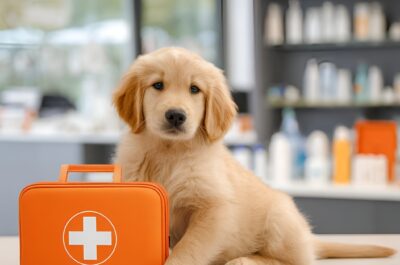
    Canine First-Aid Kit
    - A good pet first-aid book
    - Phone numbers: veterinarian, nearest emergency clinic, poison-control center/hotline
    - Paperwork: proof of rabies vaccination, and copies of other important medical records
    - Rectal thermometer (normal temperature for a dog: 100 – 102.5 F)
    - Gauze rolls, pads, and adhesive tape (white porous and self-adhesive tape)
    - Hydrogen peroxide
    - Rubbing alcohol (isopropyl)
    - Over-the-counter antibiotic ointment
    - Tweezers
    - Petroleum jelly
    - Antiseptic lotion, powder, or spray
    - A nylon leash
    - A carrier for small dogs
    - Cotton balls or swabs
    - Splints and tongue depressors
    - A muzzle or strips of cotton to prevent biting
    - Penlight or flashlight
    - Bandage scissors
    - Needle-nosed pliers
    - Plastic eyedropper or syringe
    - Sterile saline solution
    - Glucose paste or corn syrup
    - Styptic powder or pencil
    - Latex gloves
    - Ear-cleaning solution
    - Nail clippers

    Feline First-Aid Kit
    - A good pet first-aid book
    - Phone Numbers: veterinarian, the nearest emergency veterinary clinic, a poison-control center/hotline
    - Paperwork: proof of rabies vaccination status, and copies of other important medical records
    - Rectal thermometer (normal temperature for a cat: 100 – 102.5 F)
    - Sterile gauze rolls, pads and adhesive tape (white porous and self-adhesive type tape)
    - Hydrogen peroxide
    - Tweezers
    - Petroleum jelly
    - Antiseptic lotion, powder, or spray
    - A pillowcase to confine your cat for treatment
    - A carrier
    - Cotton balls or swabs
    - Splints and tongue depressors
    - Towels
    - A cat muzzle or strips of cotton to prevent biting
    - Penlight or flashlight
    - Scissors
    - Needle-nosed pliers
    - Ice pack
    - Plastic eyedropper or syringe
    - Sterile saline solution
    - Latex gloves
    - Ear-cleaning solution
    - Nail clippers

    If Your Pet Is Bleeding
    Locate the area actively bleeding. Apply a pressure bandage using gauze pads and self-adhesive tape. Make the bandage snug but not tight enough to cut off circulation. Do not apply a tourniquet as this may cause more problems than it prevents. Use extreme care if bandaging around the face and/or neck. Do not attempt to clean an open wound. Take your pet to the veterinarian immediately so that he/she (with the help of a technician or a veterinary assistant school graduate) can evaluate your pet’s condition.

    Fractured or Dislocated Limb
    Do not attempt to manipulate or place a splint on an injured limb. These injuries are very painful and any manipulation will likely cause greater pain. If possible, transport your pet in a carrier to avoid excessive movement, and take your pet to the veterinarian as quickly as possible. The clinic workers will assist you in safely removing your pet from your car without causing further injury. Use extreme caution when handling an animal with this type of injury.

    If You Suspect Heatstroke
    A pet that has had a heatstroke will have rapid, shallow breathing; excessive drooling; bright red gums; weakness (often they are recumbent, or refuse to move); and a very high body temperature. Some pets may show signs of agitation with or without vocalization. Do not attempt to bring the body temperature down by pouring rubbing (isopropyl) alcohol on your pet as this may cause the temperature to drop too drastically and may cause your pet to go into shock. Wrap your pet in cool (not cold) damp towels, and get your pet to the vet immediately. Heatstroke is a life-threatening emergency. The hospital’s veterinary assistant or technician will evaluate your pet’s condition prior to the veterinarian’s diagnosis.

    Preventing heatstroke is actually very easy. Make sure your pet always has fresh, clean water readily available. Since cats and dogs don’t sweat and have a naturally higher body temperature than humans, they can overheat very easily. Never leave your pet in a hot car – even if the windows are down and you will only be gone for a few minutes. Do not leave your pet outside on a hot day and always make sure your pet has a cool, comfortable place to escape the heat. For more tips on keeping your pet cool and preventing heatstroke, speak with professionals such as a vet assistant, technician, or veterinarian.

    If You Suspect Your Pet Has Been Poisoned
    If your pet has been poisoned, you should seek veterinary attention immediately. Do not feed your pet or attempt to make it vomit. Some poisons can do more damage to your pet coming up than going down. Your veterinarian (with assistance from a veterinary assistant and/or technician) will detoxify your pet once it has been admitted to the clinic. If detected early, most poisons can be eliminated from your pet’s body without extensive treatments. Keep cleaners and pesticides out of your pet’s reach. If you have houseplants, find out if they are poisonous to animals and keep them out of your pet’s living area. If you know what poisoned your animal, make sure you take the label – or something else that identifies the poison – with you to the vet.

    In the event of any emergency or injury involving your pet, always be sure to stay calm, act responsibly, and call your vet as soon as possible. Your veterinarian and his or her staff will guide you and your pet to safety. Remember, your pet is counting on you.

    Source: healthypet.org


  • What You Need Before Traveling With Your Pet.  - April 2009
    What you need before you travel with your pet.


    Set up an appointment with your pet’s veterinarian to ensure they are healthy prior to any travel. An examination is needed to obtain a health certificate for many forms of travel. Many times, these questions are answered by veterinary assistants in the facility they work in.

    The veterinarian may update your pet’s vaccines and test for heartworm and internal parasites. If needed, appropriate medication will be prescribed. A sedative or tranquilizer may also be prescribed and it is recommended that a trial run be conducted in order to observe the effects on your pet. While traveling, keep the health certificate, rabies certificate and medical records in an easily accessible place.

    Pets may travel throughout the United States with the proper documentation. However, Hawaii has a 30 or 120 day quarantine for all dogs and cats although the regulations may vary by species.

    If traveling to Canada, a certificate issued by your veterinarian that identifies the pet and certifies that they have been vaccinated against rabies during the preceding 36 month period is needed.

    Heading to Mexico? A health certificate signed by your veterinarian within two weeks of the day you enter Mexico is needed. It must include a description of the pet, lot number of the rabies vaccine, a note that the distemper vaccine has been given and a statement by the veterinarian that your pet is free from infectious or contagious diseases. This certificate must be stamped by the U.S. Department of Agriculture and averages around $16.50 for the stamp.

    Be sure to learn the quarantine policies before you even pack your bags. You should be able to obtain a country’s legal requirement through your veterinarian, the internet, or by contacting the embassy of the country you wish to visit. It’s worth the research to ensure an uneventful trip for you and your pet with no last minute surprises.

    Attending a veterinary assistant school can give you the tools you need to handle situations like this and improve the health and general well being of pets everywhere.

  • Safe Air Travel for Pets - May 2009
    Safe Air Travel for Pets


    According to the Humane Society of the United States, transporting your pet by air subjects them to very hot or very cold temperatures, low oxygen and air circulation plus the possibility of rough handling in the cargo hold of a plane.

    Due to problems associated with pets and air travel, Congress passed the Safe Air Travel Act in April 2000 which the Department of Transportation adopted in 2005. What this means is that all airlines that are based in America must report incidents in the cargo holds of their planes which includes losses, injuries and / or deaths. If you wish to view a month to month list of these incidents, go to Air Travel Consumer Report which is on the Department of Transportation website.

    While researching for safe travel options for your pet, always consider what is best for your pet and convenient for you. For an additional fee, if your pet is a cat or small dog, many airlines will allow you to take the animal on board with you. When you contact an airline, remember to ask:

    - Can you take your small dog or cat on board with you?
    - Is there a restriction on transporting the pet as cargo?
    - What type of carrier does the airline require? Although soft –sided carriers are more comfortable for your pet, many airlines require a hard-sided carrier.
    - Are there any pet health or vaccination requirements?

    To increase the chances of a safe flight for your pet:

    - Carry a photograph of your pet and examine them once you are in a safe area after the flight. If something appears wrong, take the pet to a veterinarian right away.
    - Try not to fly during holidays or the summer as it will increase the chance of rough handling.
    - Do “trial runs” with your pet in the carrier about one month prior to trip so they will become comfortable and reduce stress.
    - Place a label on the carrier with your name, permanent address and telephone number along with an emergency contact person. Put this information on the collar but be sure the collar isn’t too tight.
    - Pug-nosed breeds should not be shipped as their short noses make it harder for them to breath.

    If you have any questions, the veterinary assistant at your pet’s veterinary hospital should be able to answer any problems or concerns you may have.


    HSUS.com

  • Micro Chipping Your Pet - July 2010
    Microchips are about the size of a grain of rice and are actually very small transponders. A micro sized coil along with a memory circuit is enclosed within a biocompatible glass which is small enough to fit into a hypodermic syringe. A unique number is registered to your pet that is contained in the chips memory circuit and it can be read by special scanners.

    Pros:
    -The chip cannot be moved, once implanted, and can last up to 75 years.
    - The veterinarian or technician implants the device in less than a minute.
    - Pet does not have to be put under anesthesia to place micro chip.
    - Pets are not bothered by micro chip once placed.
    - Does not disfigure like a tattoo and they are tamper-proof.

    Cons:

    - More expensive than tags or tattoos.
    - If pet is found, many people would not know to take the pet to a shelter or veterinary hospital to scan.
    - Most chips are standardized; however there are still several brands that have to be registered.

    Due to the fact that people who do find lost pets may still be clueless regarding micro chipping, a combination of both the micro chip and collar with identification tags would increase the chance of your pet being returned. Your local veterinary assistant can help you scan a lost pet that you may have found for a microchip.


Website Visitors

If you would like to subscribe to ABC's Animal Care Tip of the Month, please click here for instructions.

Webmasters

If you would like to link ABC's Animal Care Tip of the Month to your website, please click here.


If you have additional questions about our Certified Veterinary Assistant Program, please feel free to contact us.

Veterinarian College

 We invite you to click through our site or speak with an ABC Admissions Counselor at:
 
1-800-795-3294
 
or Request Information on Becoming a Professional Veterinary Assistant


STATE LICENSURE and APPROVAL
Animal Behavior College is a private vocational school approved under California Education Code Sections 94915 and Title 5 of the California Code of Regulations. This approval indicates that Animal Behavior College has been visited and reviewed pursuant to state standards, and that the curricula is consistent in quality with the curricula offered by traditional institutions.
 
Privacy Policy