
Holiday Hazards: A Pet Pro’s Guide to Keeping Clients Safe This Season
By: The ABC Staff
 The holidays are a joyful time for families, but they also bring a spike in pet emergencies. Rich food, new decorations, travel, and a house full of guests can turn an ordinary week into a dangerous one for dogs, cats, and other companion animals. As a pet professional, you see clients regularly and they trust your advice, which puts you in a perfect position to help them avoid problems before they start.
Toxic Foods on the Holiday Table
Many favorite holiday foods are risky for pets. Remind clients to keep these out of reach and to ask guests not to share plates:
- Chocolate, especially dark and baking chocolate, which contain the highest levels of theobromine.
- Xylitol, a sugar substitute found in sugar-free gum, candy, baked goods, and some peanut butters. It can cause a dangerous drop in blood sugar and liver damage in dogs.
- Grapes, raisins, and currants, which can cause kidney injury in dogs. Watch for them in fruitcakes, stuffing, and cookies.
- Onions, garlic, leeks, and chives, which can damage red blood cells in both dogs and cats.
- Fatty scraps, turkey skin, and gravy, which can trigger pancreatitis.
- Cooked bones, which can splinter and cause choking or intestinal injury.
- Alcohol and raw yeast dough, both of which can make pets seriously ill.
A simple tip to share: the kitchen trash can is one of the biggest holiday hazards. A secure lid, or a can kept behind a closed door, prevents a lot of late-night emergency visits.
Plants and Decorations
Seasonal plants are beautiful, but some deserve caution:
- Lilies are the most serious concern. True lilies and daylilies are extremely toxic to cats, and even a small amount of pollen, a nibbled leaf, or water from the vase can cause kidney failure. Encourage cat owners to keep lilies out of the home entirely.
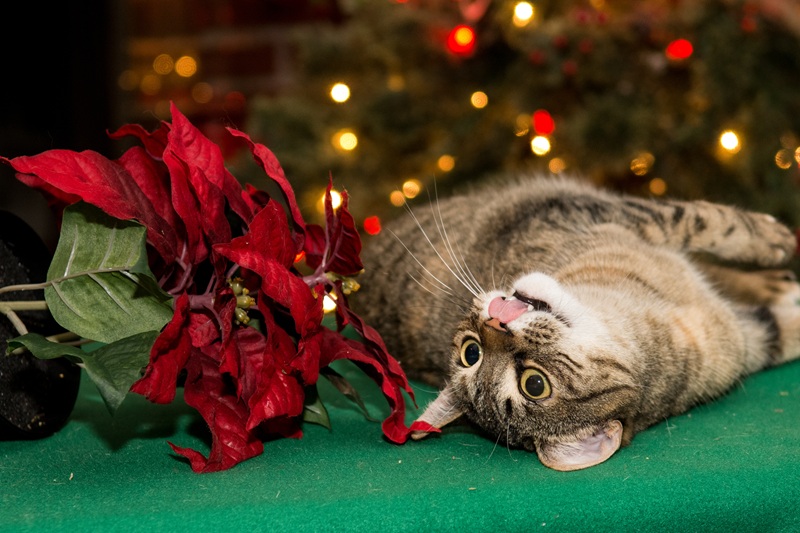
- Poinsettias have a scarier reputation than they deserve. They typically cause mild mouth irritation, drooling, or an upset stomach, but it is still best to keep them out of reach.
- Holly and mistletoe can cause vomiting and diarrhea, and mistletoe can cause more serious problems in larger amounts.
Decorations bring their own risks. Tinsel and ribbon are especially dangerous for cats, who love to play with and swallow string-like objects. These can cause a linear foreign body, a serious intestinal blockage that often requires surgery. Other hazards include glass ornaments, electrical cords, candles at tail height, and the water in a live tree stand, which may contain fertilizer or bacteria.
 Guest Stress and Busy Households
Not every holiday hazard is something a pet eats. Visitors, noise, and disrupted routines can stress even easygoing animals. Stressed pets may hide, stop eating, have accidents, or bite when cornered. Open doors also create escape opportunities.
Suggest that clients set up a quiet retreat room with a bed, water, a litter box for cats, and something to chew or play with. Pets should wear current ID tags and be microchipped with up-to-date contact information. For dogs who struggle with guests, a calm, separate space is often kinder than asking them to tolerate a crowd.
How Each Pet Pro Can Help
Dog, cat, and service dog trainers can use sessions in November and December to practice skills that matter during the holidays: “leave it,” “drop it,” settling on a mat, polite greetings, and door manners. Service dog trainers can also help handlers prepare for crowded stores, travel, and unfamiliar gatherings.
Groomers have pets on the table right before holiday photos and family visits. This is a natural moment to mention festive bandanas over tinsel collars, and to hand clients a short list of holiday safety tips with their pickup.
Veterinary assistants are often the first voice clients hear when something goes wrong. Knowing which foods and plants are most dangerous, and reminding callers to bring packaging or a photo of what was eaten, helps the veterinary team act quickly.
Aquarium and zoo professionals can remind clients and visitors that holiday travel affects every animal in the home. Automatic feeders, a trusted caretaker, and a quick equipment check before a trip help keep fish and exotic pets safe.
Keep These Numbers Handy
Encourage clients to save the number for their regular veterinarian and the nearest 24-hour emergency hospital. Two poison control lines are also available around the clock (a consultation fee may apply):
- ASPCA Animal Poison Control Center: (888) 426-4435
- Pet Poison Helpline: (855) 764-7661
A few minutes of education now can save a family a frightening and expensive emergency later. Sharing these tips is a simple way to show clients you care about their pets beyond your appointment time.

