
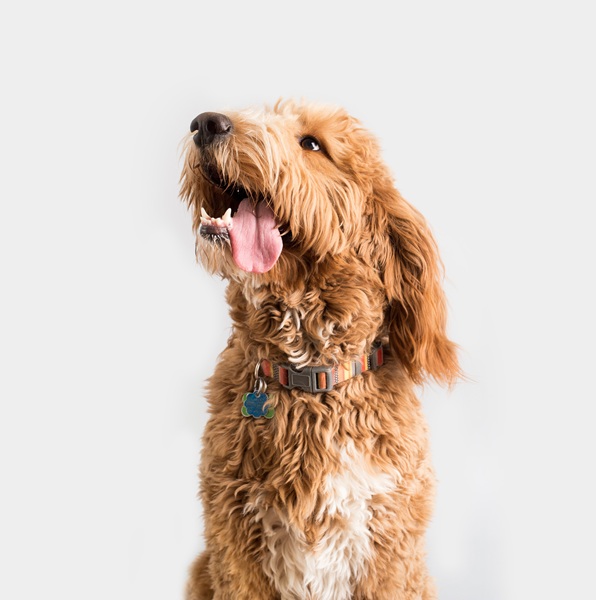
Doodle Grooming:
Coat Types, Care & Client Education
By: Tammy Siert
Global Small Animal Educator, Andis Company
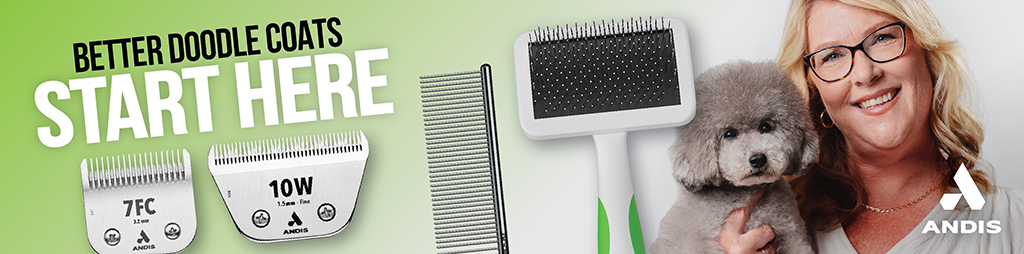 Doodles are one of the most popular – and misunderstood – coat types in professional grooming. Coat texture, density, and maintenance needs vary widely, making coat assessment and client education essential.
While doodles are poodle mixes, breed alone does not determine coat type. Coat texture can also change significantly as puppies mature, so grooming recommendations should be based on the individual dog – not breed expectations.
Common Doodle Coat Types
Curly Coat
The most poodle-like coat, curly coats are dense, low-shedding, and highly prone to matting.
Recommended schedule: Every 4–6 weeks.
Home care: Daily brushing and combing.
Wavy or Fleece Coat
A soft, plush coat that can hide tangles beneath the surface if only lightly brushed.
Recommended schedule: Every 4–6 weeks.
Home care: Brush 3–5 times weekly, followed by comb checks.
Cotton or Wool Coat
Dense, soft, and extremely prone to matting. Thorough drying is especially important.
Recommended schedule: Every 3–5 weeks.
Home care: Near-daily maintenance.
Straight or Shedding Coat
Typically easier to maintain, with more shedding and less curl.
Recommended schedule: Every 6–8 weeks.
Home care: Weekly brushing.
High-Risk Matting Areas
Matting commonly develops in these areas:
- Behind the ears
- Under collars
- Harness pressure points
- Armpits
- Belly and sanitary areas
- Tail base
- Legs and furnishings
- Paw pads
- Beard and muzzle
Matting is often caused by friction, moisture, and incomplete brushing—not coat length alone.
Intake Assessment: Set Expectations Early
During intake, assess coat type, density, matting, skin condition, grooming history, home maintenance habits, and lifestyle factors.
Helpful questions to ask:
- How often do you brush at home?
- What type of brush do you use?
- Do you use a comb after brushing?
- Does your dog tolerate brushing well?
- Has your dog been bathed recently?
Responses such as “we brush all the time” without combing or “he hates brushing” often signal a need for additional home-care education.
Create Manageable Home Care Routines
Recommend a maintenance routine that matches the dog’s coat type and lifestyle. Longer styles require more brushing, more frequent grooming, and greater home-care commitment. Shorter styles are often easier to maintain and help reduce matting risk.
Teach the Brush + Comb Method
A slicker brush separates the coat, while a metal comb confirms complete coat penetration.
If the comb catches, the brushing is not finished.
Demonstrate line brushing by working in sections from the skin outward and following each section with a comb.
Bathing & Drying Education
Improper bathing and drying can worsen matting. Teach clients to:
DO
• Brush thoroughly before bathing
• Use quality shampoo and conditioner
• Dry the coat completely
• Brush while drying
DON’T
• Bathe over mats
• Allow the coat to air dry
• Leave damp collars or harnesses on
• Assume a bath replaces brushing
Water can tighten tangles and accelerate mat formation.
Recommended Home Care Tools
- Slicker brush
- Metal finishing comb
- Detangling spray
- Dematting tool
- Nail maintenance tools
- High-quality shampoo and conditioner
Final Takeaway
Successful doodle grooming starts with accurate coat assessment, realistic expectations, and consistent client education. When groomers and pet parents work together, dogs stay healthier, more comfortable, and easier to maintain between appointments.