

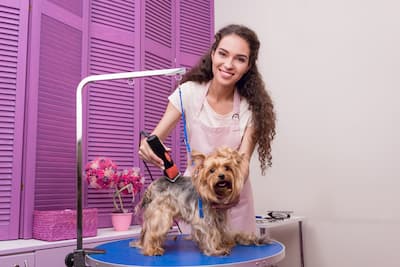
Enrolling in a dog grooming academy might be the perfect career move if you love dogs and cats and have a creative flair. Whether you want to make pet grooming a full-time career or are looking for an engaging and profitable side gig, pet grooming has a lot to offer. You get to work with animals all the time and make them look and feel fabulous. There’s plenty of opportunity to express your creative side as a groomer, what’s not to like?
No dog groomer school near you? No problem! You can learn to become a professional groomer online. With ABC, you can learn a new career no matter where you live as long as you have good internet access. And if you work at the intended pace you could be a certified pet groomer in about 12 months! The grooming program can lead to the National Certified Master Groomer (NCMG) credential.
You might be wondering how you can master a career like dog grooming online–and with good reason! How could you possibly learn how to groom pets without the chance to practice on real dogs and cats?
Animal Behavior College solved that problem a long time ago! The solution was to combine online learning and real-world practice. We started with our dog training program in 1998 and later applied this hybrid solution to our grooming program.



















































Online Coursework/In-Person Dog Grooming Experience
As an ABC student you’ll have access to the best pet grooming training online. Our curriculum was created by professional groomers and includes plenty of valuable training videos.
After completing the online part of the course, you will have all the foundational knowledge needed. You just need a chance to hone your skills in a real-world setting and the next module of our program, the externship, provides just that–the chance to get in person experience in a professional grooming facility near you.
For your externship you’ll be paired with a local mentor groomer for at least 150 hours of experience. We partner with over 3,200 mentor facilities to provide plenty of opportunities for our students to get this experience.
Practice makes perfect and your success is our goal by the end of the externship you will be required to demonstrate a full groom on your own!



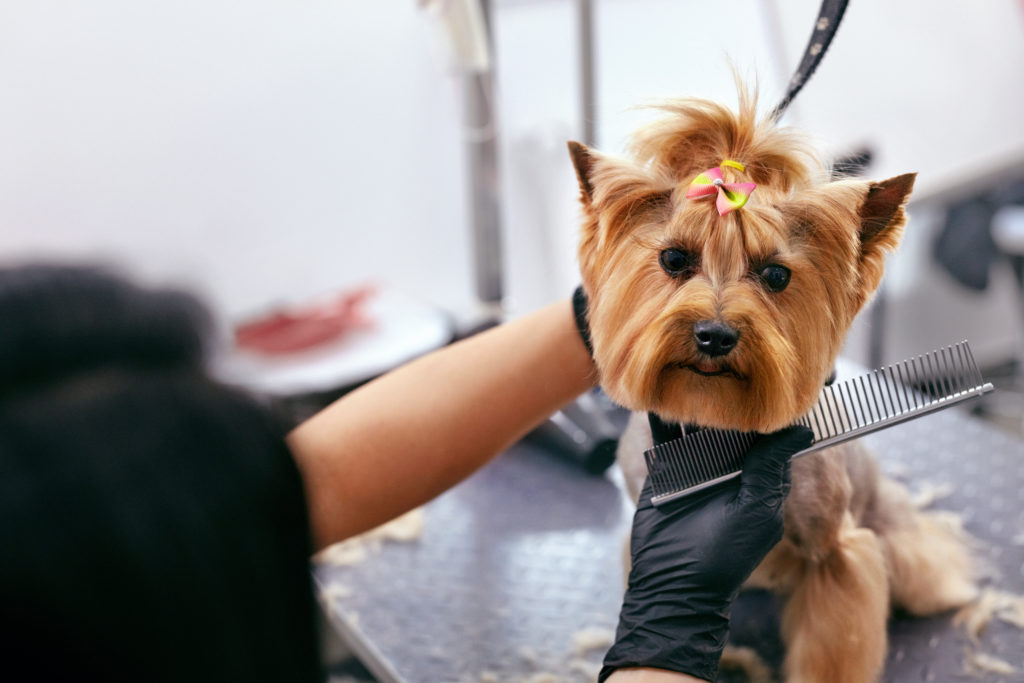
Dog Groomer Certification
 After successful completion of our dog grooming course, you’ll become an Animal Behavior College Certified Pet Groomer (ABCPG). Receiving your dog groomer certification shows employers you’ve learned the fundamentals of pet grooming and you’re serious about a career as a dog groomer. Taking the time to pursue your dog grooming certification may work in your favor when applying for animal jobs or even starting your own dog grooming business.
